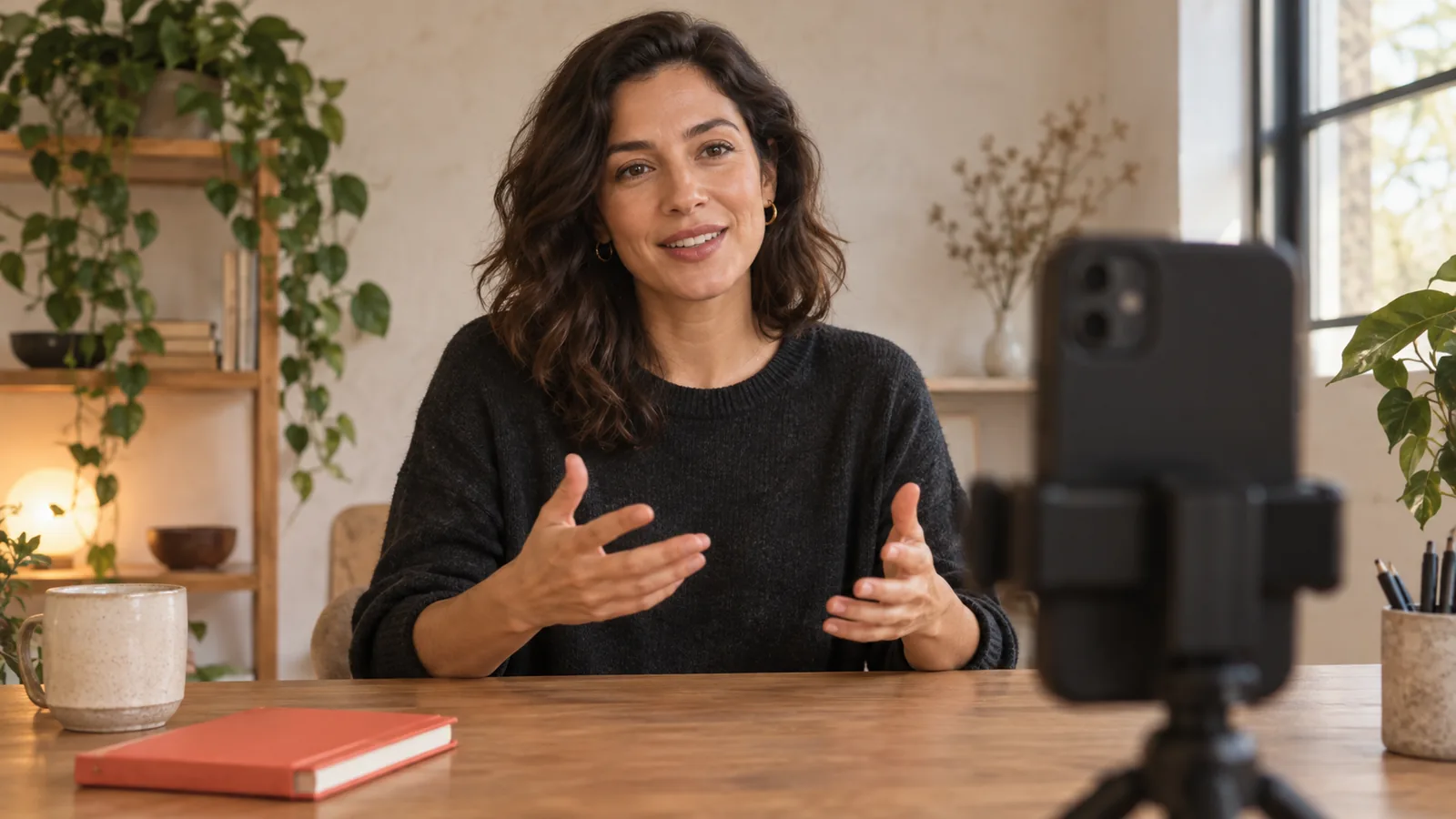










A useful UGC product demo shows a specific person doing a specific task with a product. The script explains the decision or action while the shots make it visible. Start with what the viewer needs to understand: how something opens, fits, attaches, moves or is used in an ordinary situation. Then choose claims that your recording can actually support.
UGC is often used loosely to describe creator-style brand content, including commissioned work. Whatever label a brief uses, the viewer should understand the commercial relationship. A paid demonstration should not be presented as an independent customer discovery, and an invented testimonial should not be used as a shortcut to a persuasive story.
Define the task and the limits of the demonstration
Our example is a reusable bottle carried in a work bag. The task is showing how to open it, fill it according to its instructions, close it and place it in the bag. We are not claiming that the bottle is leakproof, keeps a drink at a certain temperature or is safe for every beverage. Those are separate claims requiring appropriate evidence and attention to the actual product instructions.
Write a brief with five fields: intended viewer, everyday situation, product action, evidence available and next step. For this example, the viewer carries water to work; the situation is preparing a bag; the action is opening and packing the bottle; the evidence is the recorded handling; the next step is checking whether the product’s size and instructions suit the viewer’s needs.
If a brand supplies a required claim, ask what supports it and how it should be qualified before filming. Do not quietly convert a limited specification into a universal promise. “The manufacturer lists this capacity” and “this will last you all day” are different statements, even if they sound similar in an enthusiastic script.
Draft the spoken explanation before adding sales language
Here is an original sample voiceover for the example. It is a writing model, not a review of a real bottle or a report of testing we performed. Replace its details only after checking the actual item and recording the relevant actions.
“This is how I would prepare this bottle for my work bag. First, I remove the lid so you can see the opening. I fill it within the limit in the product instructions, then close it as directed. Here is the bottle beside the pocket I want to use, so you can judge the fit. I can reach the lid without unpacking the whole bag. Before choosing one, check the dimensions, cleaning instructions and the drinks it is designed to hold.”
The script stays close to observable actions. It does not call the product the best, invent a long-term experience or imply a durability test. If you genuinely used the product over time, describe that experience precisely and keep it separate from facts supplied by the manufacturer.
Build a shot list that proves each useful point
| Shot | What to record | Purpose |
|---|---|---|
| Context | The bottle beside the actual bag, with unrelated personal items removed. | Establish the everyday task and scale. |
| Opening | A close view of both hands removing the lid without covering the mechanism. | Show the action that the voiceover describes. |
| Preparation | The relevant filling or preparation step, following the item’s instructions. | Keep the sequence understandable and accurate. |
| Closure | The closing movement from an angle where the viewer can see what happens. | Avoid hiding the most important action behind a hand. |
| Fit | The bottle placed into the intended bag pocket, with the full opening visible. | Show this particular fit without claiming it fits every bag. |
| Finish | The packed bag and the bottle’s accessible position. | Close the task rather than adding an unrelated beauty shot. |
For each shot, note whether live speech is necessary or whether you will record voiceover separately. Handling sounds can be useful, but a loud cap movement may obscure a sentence. Make that choice before recording so you know which audio is essential and which is optional.
Keep continuity simple
Place the product and props consistently between takes. If the lid moves from one side of the table to the other without explanation, the edit may feel confusing. Record a short reference image of the setup for your own production notes, excluding private information. You do not need a complicated continuity system for a small demonstration, just enough consistency to connect the actions.
Keep the same relevant conditions when you show a comparison. Do not use different lighting to make one product look artificially better, hide a necessary extra step, or cut away at the moment a claimed action fails. If the demo cannot be completed clearly in the available time, simplify its scope instead of manufacturing an effortless result.
Make commercial context easy to understand
For content aimed at US consumers, the FTC’s influencer guidance explains that material brand relationships should be disclosed clearly with the endorsement. Paid work and free products can both matter. Local requirements and platform tools also need review for the audience you serve. Build the appropriate disclosure into the publication plan before delivery, rather than treating it as an optional caption added later.
Keep disclosure language separate from the persuasive benefit statement so neither is hidden. If you are making a fictional sample for a portfolio, label it as a sample and avoid implying a real commission or customer experience. That distinction helps a future client judge your production skills without confusing the example with evidence.
Review the finished sequence against the brief
- Does the first shot establish the task rather than merely displaying packaging?
- Can the viewer see the action while the narration describes it?
- Is each factual claim supported by the actual recording or an identified reliable source?
- Have required conditions and commercial disclosures survived the edit?
- Are the product, hands and important details visible in the intended vertical or horizontal crop?
- Does the ending offer a relevant next step without an invented discount, deadline or availability claim?
Finally, open the exported file and review the exact version you will deliver. Check audio, captions, framing and any accompanying copy together. A careful shot plan is valuable because it makes the finished demonstration easier to understand and assess, not because it guarantees sales.
Use Teleprompter to rehearse a direct-to-camera introduction or the narration before you record the demonstration. Keep product handling notes outside the spoken text. The app supports preparing your delivery; evidence for product claims still comes from the real item and the work you actually perform.